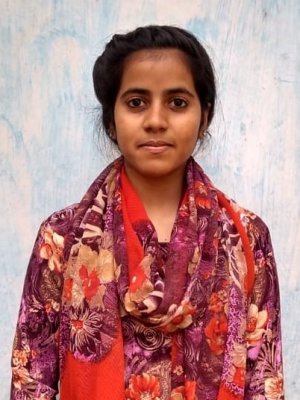
Hello! I'm Sania Fathima, Nineteen years old, living in Balnagar Hyderabad, India. I have completed my intermediate from Gauthami Junior College. Now I am pursuing degree B.com (CA) in Gauthami Degree College. My hobbies are reading books, playing kabbadi, singing bollywood songs, and learning about new technology. I like to know about computers and space. I'm from respectable middle class family.
We are six members in family. My father's name is (late) Mohmmed Shakeel Ahmed. My mother's name is Asiya Begum, she is a home maker. I have an elder brother his name Mohmmed Mumtaz Ahmed, who is a small entrepreneur. And I have two sisters: one is elder whose name is Shahnaz Fathima, she is pursuing her degree 2nd year in Sri Vidya Degree College, and one is younger sister who's name is Sana Fathima who's preparing for NEET entrance exam (National Eligibility Cum Entrance Test).
I have found myself great friends during schooling and intermediate, who share every moment of their lives with me, they are Muskaan Fathima and Madiha (etc). I thank my school teachers and college teachers, who taught us moral values and ethics and I would like to thank my voluntary Rakesh Sir for conducting private online classes through zoom.
Last but not least. I also wish to show my gratitude to Tom Holloway an IBM Computer Consultant who conducts online classes through Zoom cloud as a platform on solar space and computers mostly.

A government performs variety of functions such as:
 creating laws and order.
maintaining
law and order.
defend the law.
To perform various functions, the government of India has three branches. Each has its own specific function and administration. Composed of-
Legislative branch.
Executive branch.
Judiciary branch.
1.LEGISLATIVE BRANCH:
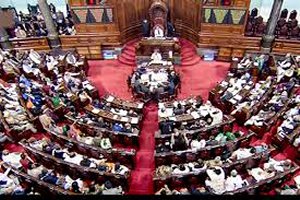
The legislative branch of Indian government is called the Indian parliament. It includes:
 President of India
Lok Sabha and
Rajya Sabha
Lok Sabha
Lok Sabha is also known as house of people and lower house.
In Lok Sabha there are maximum 545 members 530 members are elected from states and 13 members are elected from union territories and 2 members are elected from Anglo Indians nominated by president of India.
Direct elections are held for members of lok Sabha.
Rajya Sabha
Rajya Sabha is also known as council of states and upper house of the parliament.
In Rajya Sabha maximum members are 245. Out of these 229 members are from states and 4 from union territories.
Twelve members are nominated by the president who are from the fields of arts, science, literature and other social services etc.
2.EXECUTIVE BRANCH:
Responsible for daily
administration of the states bureaucracy it includes-
President
Vice President
and
Prime Minister
President
of India:
Head of state and first citizen of India. Represents unity, integrity
and solidarity of nation. Elected by members of both houses of parliament
and members of legislature assembly of states and territory.
Appoints many officials in India including governors of 29 states, the chief justice of India, other judge of supreme court on the advice of other judges. It also appoints attorney general,CAG,CEC and other members of UPSC.
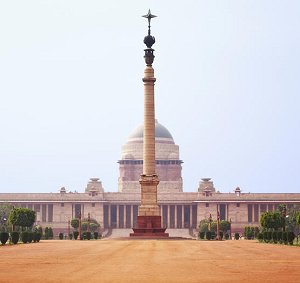
Second highest constitutional position in India after the president. Represents the nation in the absence of the president. Ex officio chairman of Rajya Sabha.
Chief of Indian government. Advisor to the president. Head of the council of ministers. Leader of the majority party. Allocates posts to all the members of the cabinet.
3.JUDICIARY BRANCH:
The Judicial branch
of India is divided at various levels.
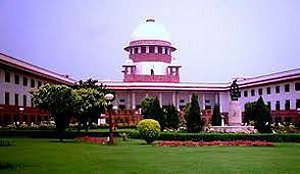
Supreme court
High court and
District court
Supreme court
Supreme court of India is known as apex court and its located in new Delhi.
The Supreme court of India includes Chief Justice of India and 30 other
judges. The chief justice of India is appointed by the president by the
president of the India after consultation with judges of supreme court
and high court.
High court
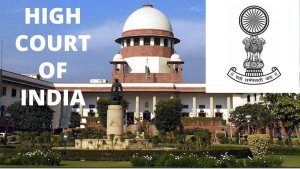
There will each high court for each high court for each state. High courts
works under guidance of supreme court. The chief justice of high court
is appointed by president of India on discussion with the chief justice
of India and governor of related state.
District court
District court includes several civil courts and criminal courts. District
courts deals with various cases such as civil courts and criminal courts.
District courts deals with various cases such as civil claim property
related matter to criminal cases. In criminal court, judge is known as
Session judge and civil court judge is known as District judge.